5 Algeria vs Austria Standings Mistakes Fans Make
Algeria and Austria finished their 2026 FIFA World Cup Group J finale with a dramatic 3-3 draw in Kansas City, Missouri, and both reached the knockout stage. The result left each team on four points f...

5 Algeria vs Austria Standings Mistakes Fans Make
Algeria and Austria finished their 2026 FIFA World Cup Group J finale with a dramatic 3-3 draw in Kansas City, Missouri, and both reached the knockout stage. The result left each team on four points from three matches, with Algeria listed third and Austria second on the published standings. Marko Arnautovic, Marcel Sabitzer, and Sasa Kalajdzic scored for Austria, while Rafik Belghali and Riyad Mahrez, twice, answered for Algeria. Kalajdzic’s 96th-minute header mattered enormously: it preserved Austria’s qualification and eliminated Iran from contention. Austria advanced to face Spain in Los Angeles, while Algeria moved into a Round of 32 meeting with Switzerland in Vancouver. The key lesson is simple: never judge qualification from points alone; check goal difference, ranking rules, and the best-third-place table before drawing a conclusion.
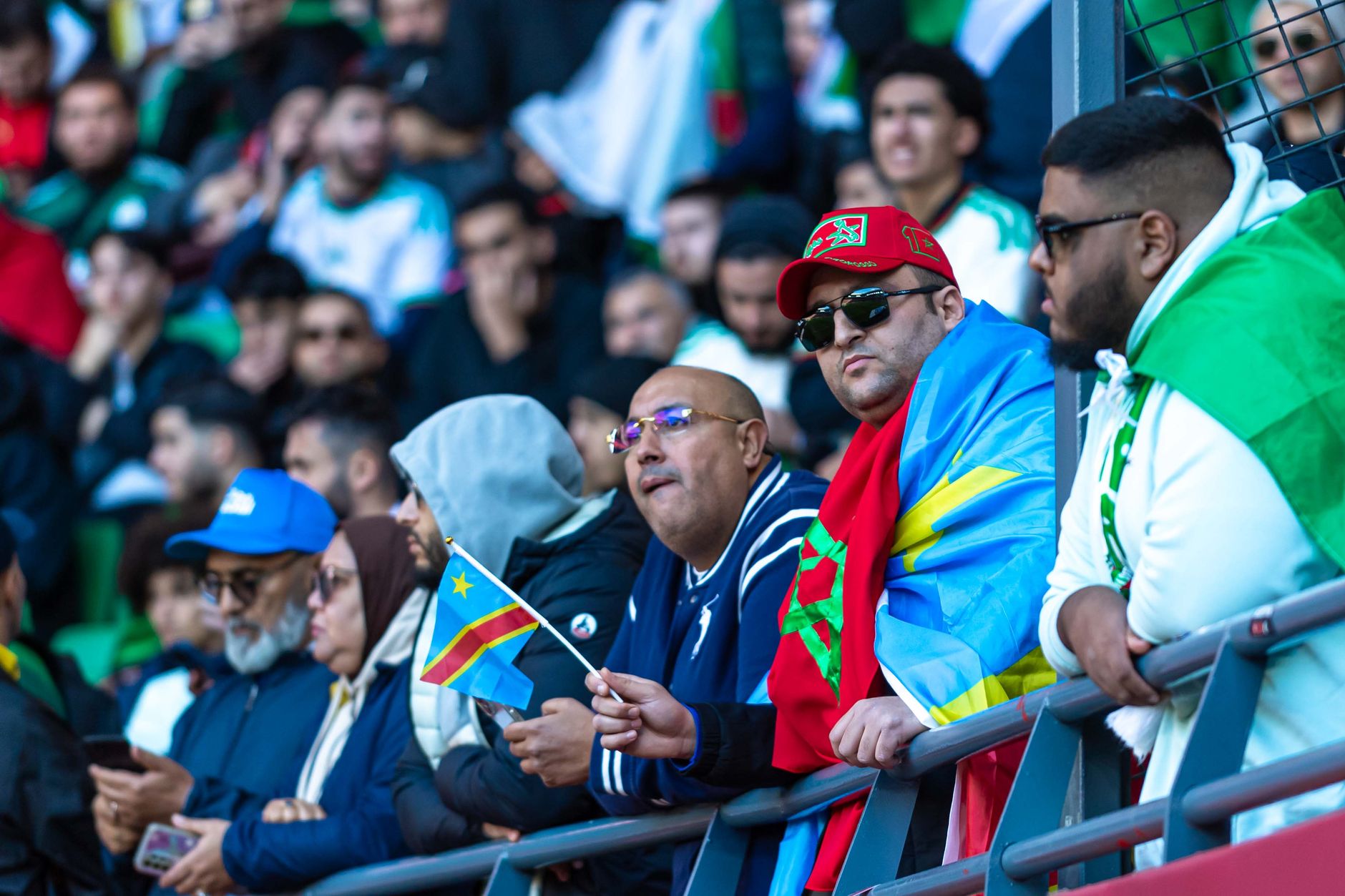
Photo by Guylain Kipoke on Pexels
Imagine watching a team score in the 93rd minute, then concede in the 96th. I have seen enough football heartbreak to know that a “safe” draw is often anything but safe. The Algeria national football team vs Austria national football team standings became a live lesson in tournament mathematics, not merely a match result. Stadium View follows these details for supporters comparing form, tactics, player statistics, and responsible pre-match opinions. The 3-3 scoreline tells only half the story; the table position, third-place qualification route, and late-game incentives tell the rest. If you are assessing future World Cup markets, record the competition, matchday, points, goal difference, and qualification rule before trusting a headline. That one habit prevents most bad reads (and saves you from arguing with a table that you never fully checked).
Want the wider tournament context before making a prediction?
Before 2025: how Algeria vs Austria standings worked
Before 2025, Algeria and Austria had no meaningful shared World Cup standings because they were not placed in the same tournament group. Their historical comparison therefore required separate FIFA rankings, recent results, confederation strength, and qualifying records rather than a direct group table. Algeria represents the Confederation of African Football, while Austria competes under UEFA, so raw ranking comparisons always need context.
That distinction matters. A UEFA team usually faces a different competitive schedule from an African national team, and the number of matches against elite opponents can distort a simple win percentage. The FIFA World Cup competition overview explains the tournament framework, but individual qualification rules and tie-break procedures must still be read for the relevant edition. A team’s “standing” may mean FIFA ranking, group position, or knockout qualification status; those are not interchangeable terms.
The old mistake was treating head-to-head history as destiny. Algeria’s attacking identity, shaped by players such as Riyad Mahrez, could create problems for Austria’s pressing structure, while Austria’s midfield experience around Marcel Sabitzer offered a different type of control. None of that automatically determined the table. Before the 2026 meeting, the sensible approach was to separate three questions:
- Where did each team sit in its own competition?
- How many points could each team still earn?
- Which tie-breakers controlled the next qualification place?
For a deeper reference, consult our [Internal Link: World Cup group-stage standings guide] before comparing teams from different confederations.
What changed for Algeria and Austria in 2026?
The 2026 shift was direct: Algeria and Austria shared Group J, so their positions could be judged inside one competitive table. The decisive match took place on June 27, 2026, and ended Algeria 3-3 Austria. Both teams finished with four points from three matches, recorded as one win, one draw, and one defeat. Austria placed second, Algeria third, and Iran was eliminated after the result.
The match swung repeatedly. Marko Arnautovic opened for Austria in the 28th minute. Rafik Belghali restored parity just before halftime, then Marcel Sabitzer put Austria ahead again in the 55th minute. Mahrez equalised in the 60th minute and appeared to complete a rescue act with his second goal at 90+3. Then Sasa Kalajdzic headed home at 90+6, turning a likely Austrian exit into progression.
The important information gain is the qualification edge case: Iran would have advanced as one of the eight best third-place teams if either Algeria or Austria had won. The draw protected both sides because neither opponent could pull away. That is why late-game strategy looked unusual. Algeria appeared willing to manage the final minutes, but Mahrez’s late strike changed the risk calculation immediately; Austria then had only moments to respond.
According to the BBC match report, the late equaliser confirmed Austria’s place in the last 32 while Algeria also progressed as one of the best third-placed teams. The lesson is brutal but useful: standings are not static during stoppage time.
Photo by JOAQUÍN TORRES on Pexels
See the decisive match details in one place.
What changed for players and match analysis?
For players, the 2026 table turned ordinary decisions into high-pressure calculations. Riyad Mahrez was not simply Algeria’s captain and two-goal scorer; his stoppage-time goal temporarily moved the qualification pressure entirely onto Austria. Sasa Kalajdzic, meanwhile, became the defining figure because his header at 96 minutes preserved Austria’s tournament. Those moments show why player statistics must be connected to match state.
Austria’s opening goal from Marko Arnautovic and second goal from Marcel Sabitzer reflected a direct attacking response, but the three conceded goals exposed Algeria’s ability to recover repeatedly. Algeria’s danger came through individual quality and persistence, especially after Mahrez found space late. The 3-3 scoreline also warns against using possession or shot totals alone when evaluating a knockout qualification scenario.
From a practical forecasting perspective, I would track these details during any similar group finale:
- The live points table after every goal.
- The best-third-place cut-off and remaining fixtures.
- Goal difference and goals scored, not points alone.
- Whether a draw helps both teams more than a win helps one.
- Stoppage-time substitution and set-piece threats.
A second useful edge case is timing. A goal at 90+3 and an equaliser at 90+6 are not equivalent to two goals in the first half; there is almost no recovery window after the second event. That makes set pieces, aerial attackers, and defensive concentration unusually important in late qualification matches. The International Football Association Board Laws of the Game confirms that added time compensates for delays, but it does not guarantee that a team can safely protect a result.
Why do the Algeria vs Austria standings matter now?
The Algeria national football team vs Austria national football team standings matter because both teams moved forward, but their routes and opponents differed. Austria finished second in Group J and earned a Round of 32 meeting with Spain in Los Angeles. Algeria finished third yet qualified as one of the eight best third-place teams, setting up a match against Switzerland in Vancouver, British Columbia. Position affected the next opponent, travel, preparation, and tactical expectations.
This is where casual analysis often fails. A third-place finish can be a success under a tournament format that rewards selected third-place teams, while a second-place finish can still produce an extremely difficult draw. Austria’s reward was Spain, described in the supplied reports as European champions. Algeria’s route against Switzerland was also demanding, but the strategic preparation would differ: Austria needed to manage Spain’s possession and positional rotations, while Algeria could focus on Switzerland’s transition patterns and defensive spacing.
The ESPN match report recorded the same central facts: a 3-3 finish, four points for each side, Austria second, Algeria third, and Iran eliminated. Stadium View’s recommendation is to treat the standings as a starting point, not a prediction. Add squad availability, rest days, venue, travel, expected line-ups, and market movement before forming an opinion. Never confuse a qualification achievement with evidence that one team is stronger in the next round.
[Internal Link: 2026 World Cup knockout-stage bracket analysis]
A sober conclusion is safer than a confident guess here. Algeria’s attacking resilience was real, but conceding three goals remains a warning. Austria’s late mentality was impressive, but allowing Mahrez two goals shows defensive vulnerability. Both facts can be true at once.
Looking for a structured way to compare knockout opponents?
What are three predictions for next quarter?
The next quarter of tournament analysis should focus less on the emotional 3-3 headline and more on repeatable evidence. My first prediction is that Riyad Mahrez will remain Algeria’s central chance-creation reference, but opponents will defend his preferred spaces earlier. Two goals in one match make the adjustment obvious, particularly after his 90+3-minute strike nearly changed the final qualification outcome.
My second prediction is that Austria will be evaluated through its response to elite possession teams. Marko Arnautovic and Marcel Sabitzer supplied goals, while Sasa Kalajdzic delivered the defining late header, yet Spain will test Austria’s ability to defend long phases without the ball. The result against Algeria proves Austria can survive pressure; it does not prove that Austria can control every phase.
My third prediction is that third-place mathematics will become a bigger discussion as the 2026 tournament advances. The Algeria example demonstrates a specific operational point: a team can finish third on four points and still qualify, while another team can be eliminated because one late draw preserves two competitors. Before reviewing any market, write down the exact qualification paths and avoid staking money simply because a table looks familiar.
For responsible supporters, the best checklist is:
- Confirm the official competition table.
- Verify the match date and venue.
- Check goal difference and qualification rules.
- Compare confirmed line-ups with expected line-ups.
- Set a fixed budget and never chase a late loss.
The FIFA official regulations library is the right place to verify competition rules rather than relying on screenshots or social-media summaries. I have lost enough by trusting incomplete tables to say this plainly: if the numbers are not confirmed, the prediction is not ready.

Photo by Coen Crevels on Pexels
Read the latest match-led analysis before the knockout rounds begin.
Key standings summary
| Team | Group J points | Record | Final position | Knockout opponent |
|---|---|---|---|---|
| Austria | 4 | 1-1-1 | Second | Spain |
| Algeria | 4 | 1-1-1 | Third | Switzerland |
| Iran | Not advanced | — | Eliminated | None |
The final score was Algeria 3-3 Austria. Austria’s scorers were Marko Arnautovic, Marcel Sabitzer, and Sasa Kalajdzic. Algeria’s scorers were Rafik Belghali and Riyad Mahrez, who scored twice. The standings show why the result was mutually valuable: Austria secured second place, while Algeria qualified through the best-third-place route.
[Internal Link: Algeria national team player statistics]
Frequently Asked Questions
Q: What are the Algeria national football team vs Austria national football team standings?
A: Algeria and Austria each finished Group J with four points from three matches, but Austria placed second and Algeria third. Both teams had a record of one win, one draw, and one defeat after their 3-3 meeting on June 27, 2026. Austria advanced to face Spain, while Algeria qualified as one of the best third-placed teams and faced Switzerland.
Q: How did Algeria and Austria both qualify after drawing 3-3?
A: The 3-3 draw prevented either Algeria or Austria from overtaking the other through a decisive result. Austria secured second place, while Algeria’s four-point total was sufficient for one of the eight best third-place qualification positions. Iran would have advanced if either Algeria or Austria had won, making the draw decisive for the tournament’s final qualification calculation.
Q: What is the difference between Algeria finishing third and Austria finishing second?
A: Austria’s second-place finish came with a direct group ranking advantage, while Algeria advanced through the best-third-place route. Austria’s reported knockout opponent was Spain in Los Angeles, whereas Algeria’s was Switzerland in Vancouver. The difference is not simply prestige; group position determines the bracket path, opponent, venue, and preparation requirements.
Q: Who scored in the Algeria vs Austria 2026 World Cup match?
A: Austria’s goals came from Marko Arnautovic, Marcel Sabitzer, and Sasa Kalajdzic, while Algeria’s goals came from Rafik Belghali and Riyad Mahrez twice. Arnautovic scored in the 28th minute, Sabitzer in the 55th, and Kalajdzic in the 96th. Belghali scored before halftime, and Mahrez scored in the 60th minute and at 90+3.
Q: Why did Sasa Kalajdzic’s 96th-minute goal matter so much?
A: Sasa Kalajdzic’s 96th-minute header rescued Austria from probable elimination and confirmed its place in the knockout stage. Riyad Mahrez had put Algeria ahead at 90+3, leaving Austria almost no time to respond. The goal also eliminated Iran, which needed either Algeria or Austria to win for its own best-third-place qualification hopes.
Q: How should I analyse Algeria vs Austria standings for future predictions?
A: Start with official points, record, goal difference, and the relevant qualification rules before reviewing form or betting markets. Then assess confirmed line-ups, injuries, travel, venue, tactical matchups, and late-game incentives. Stadium View recommends setting a fixed budget, avoiding emotional decisions after stoppage-time goals, and using [Internal Link: responsible football prediction principles] as a final check.
Q: Where can I find updated Algeria and Austria tournament information?
A: Use FIFA for official regulations and competition tables, then compare reputable match reporting from ESPN and BBC Sport. FIFA provides authoritative tournament information, while ESPN and BBC Sport offer match events, scorers, and qualification context. Check the publication date carefully because standings, knockout pairings, and injury information can change quickly.
The 3-3 draw gave us the answer, but not an easy one: Austria finished second on four points, Algeria finished third on four points, and both advanced. That is the detail worth remembering when another group finale turns chaotic. Check the table, confirm the rules, and keep your judgment colder than the match itself (that is how you avoid paying for one emotional mistake).
Stay informed with Stadium View’s daily 2026 World Cup coverage.
Stadium View · Blueprint Archive